-
Generational Transition in the Company: Preparing for the Future While Preserving the Legacy
October 23, 2026
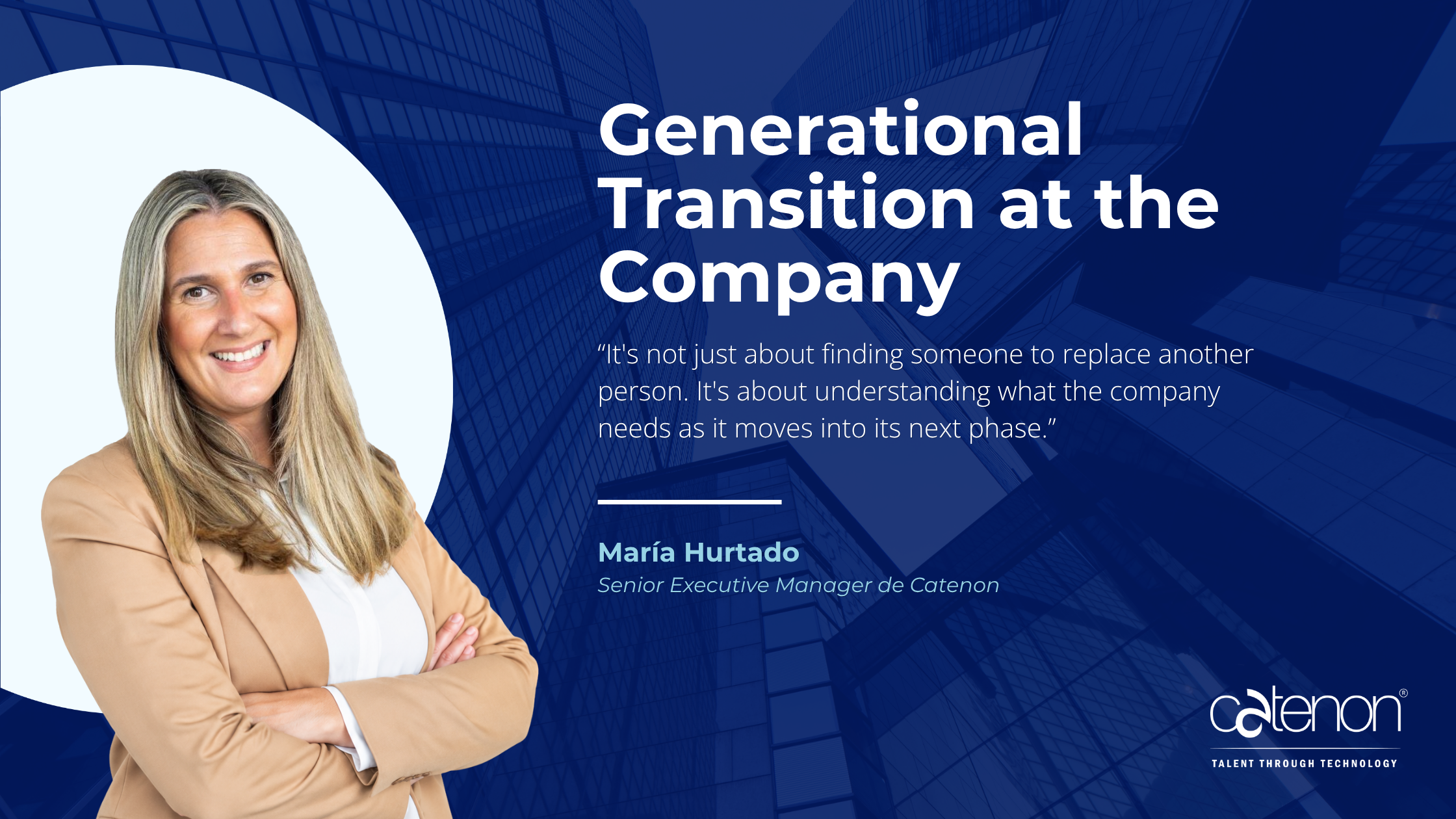
The generational transition in a company raises a question that goes beyond who will take over the leadership: what does the organization need to face its next stage? Answering this requires reviewing the strategy, the team's capabilities, and a culture built over years.
This is the perspective of María Hurtado, Senior Executive Manager & Headhunter at Catenon, drawn from her experience accompanying companies in these executive search processes:
"A generational transition is not just about finding someone to replace someone else. It's about understanding what the company needs in its next stage."
Her approach highlights an essential part of our professionals' work: understanding the context of each organization before undertaking executive selection. In a leadership change, expectations, relationships of trust, and knowledge coexist and also need continuity.

Defining the company we want to prepare
Before identifying potential successors, it is important to understand why the transition is being considered and what objectives it should facilitate.
The next stage may require new capabilities, a different organization, or an evolution in management style. Therefore, taking the current leader's profile as the sole reference can limit the search for executives.
María suggests starting with a question: "What is the starting point, and what do we want to achieve?" This reflection helps connect the executive succession with the needs of the business.
To organize the assessment, it is useful to review:
- What priorities will mark the next stage.
- What business leadership capabilities will be necessary.
- What strengths of the organization should be preserved.
- What changes the transition will need to accompany.
With this foundation, candidate assessment can be based on what the company needs to move forward.
Clarifying corporate governance and responsibilities
The transition also requires reviewing who decides and how responsibilities are distributed.
Ownership, the board, and the management team have functions that must be clear during the transition. When there are areas of ambiguity, the new executive leadership may find it difficult to exercise its responsibility, and the team may receive mixed signals.
María places this issue among the first conversations of the process: how corporate governance is organized and what role each party should assume.
Defining these limits allows for structuring the support for the outgoing leader and the decision-making space for the incoming one. It also makes it easier to explain the change to the organization more clearly.

Evaluating internal talent and the contribution of the labor market
With the business needs defined, it is time to analyze the executive talent options.
Recognizing capabilities within the organization
The team may have professionals ready to take on new responsibilities or with the potential to develop them. Identifying them requires assessing their experience, capabilities, and readiness for future challenges.
Knowing the company well adds value, but the evaluation must also consider the demands of the new stage and the support each person would need.
Exploring what capabilities can be brought in
The external market allows us to discover profiles with other experiences, perspectives, and leadership styles.
The key is to determine what contribution the organization needs and how it would fit into its context. Comparing both avenues with clear criteria helps make an informed decision.
María's background in recruitment consulting and team management provides context to this perspective: evaluating talent requires linking people's capabilities with the specific needs of each company.
Taking care of the culture during the leadership change
Culture occupies a central place in María's vision. A significant part of what holds an organization together is expressed in habits, relationships, and ways of working that are not always documented.
Therefore, finding the right person is only part of the process. It is also necessary to transfer knowledge, build trust, and support the coexistence of new leadership styles and established practices.
"We must also manage the change, transfer knowledge, build trust, and ensure that new ways of leading coexist with the essence of the company."
This approach reflects a focus on the human component of executive decisions. Listening to those who have built the company and understanding the team that will continue allows for approaching the transition with greater knowledge of the context.
Recognizing the legacy and making room for the next stage
Preparing for succession involves recognizing the contribution of those who have brought the company to its current situation. Their experience, relationships, and knowledge can help those taking over the leadership.
At the same time, the next stage requires clear responsibilities and room to make decisions. Agreeing on how this transition will take place allows for continuity of knowledge and facilitates the evolution of the organization.
María's vision summarizes this balance:
"Preparing the company for what is to come, without forgetting everything that brought it here."
At Catenon, we value the judgment our professionals bring to these conversations. María's perspective shows the importance of listening, understanding the business, and considering the culture when guiding talent decisions.
Is your company preparing for a generational transition?
At Catenon, we help you evaluate your options and identify the executive talent your next stage requires. Let's talk about your starting point.

#ExecutiveSearch #SelecciónDeDirectivos #TalentoDirectivo #ConsultoríaDeSelección #LiderazgoEmpresarial #DecisionesDeTalento #RelevoGeneracional
VIEW PUBLICATION